


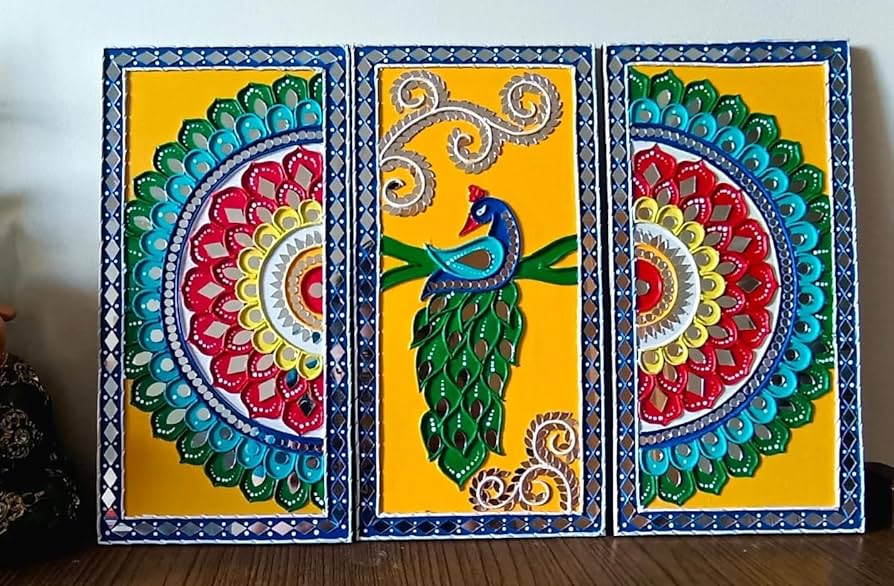

Lippan Art: The Shimmering Mud-Mirror Craft of Kutch
Lippan Art , also known as Mud-Mirror Work, is one of the most enchanting and culturally rich traditional crafts of the Kutch region in Gujarat, India. This stunning art form beautifully blends the simplicity of natural clay with the brilliance of hand-cut mirrors, creating wall murals that sparkle with life and light. Traditionally crafted by the Rabari community, Lippan art was originally used to decorate the inner and outer walls of village homes, adding both aesthetic beauty and a sense of cultural identity to everyday living spaces. The word “Lippan” comes from the Gujarati term meaning “to apply clay,” referring to the process of molding wet mud into intricate patterns that are then embellished with mirrors of different shapes and sizes.
What makes Lippan art truly unique is the delicate craftsmanship involved. Artisans begin by shaping a mixture of local clay and camel dung, which gives the artwork its strength and durability. The paste is carefully applied onto walls or wooden panels, and it is then sculpted by hand into motifs inspired by nature—such as peacocks, camels, elephants, trees, sun, moon, flowers, and geometric designs. The mirrors are pressed into the wet surface, catching every ray of light and transforming the artwork into a dazzling display of sparkle and reflection. When light moves across the mirrors, the artwork glows, giving interiors a warm and magical ambiance.
Today, Lippan art has expanded beyond traditional village homes and has found a special place in modern décor. Artists now create framed panels, wall hangings, installation pieces, and contemporary designs that are admired worldwide. It beautifully bridges tradition and innovation, preserving the cultural essence of Kutch while appealing to modern aesthetic sensibilities. Lippan art is more than decoration—it is a celebration of heritage, craftsmanship, and the power of handmade artistry that continues to shine through time.


