


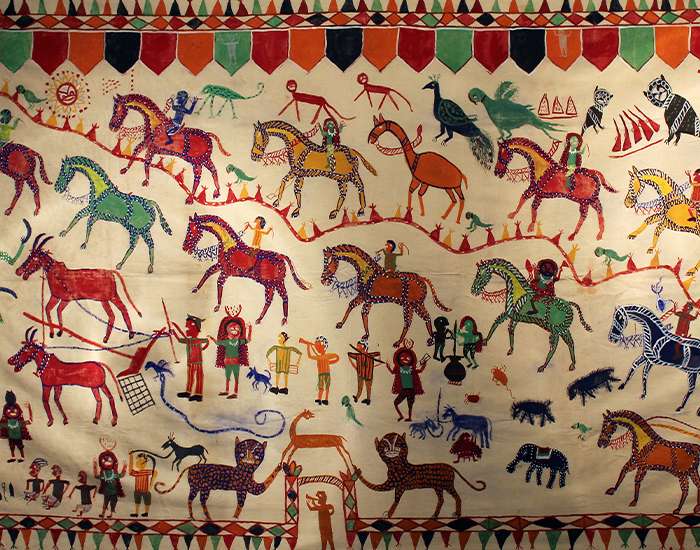

Pithora Painting: A Sacred Celebration of Life, Ritual & Tribal Identity.
Pithora painting is a powerful and sacred art form deeply rooted in the cultural and spiritual traditions of the Rathwa, Bhil, and Nayak tribes of Gujarat and Madhya Pradesh in India. More than just an artistic expression, Pithora paintings are ritualistic offerings created to honor gods and seek blessings for health, prosperity, peace, and protection. Traditionally drawn on the walls of homes and community spaces, these paintings are not made for decoration alone—they are created after prayers, ceremonies, and offerings, often guided by a priest known as Bhadwa. Each painting becomes a spiritual bridge connecting the community with the divine forces they believe guide their lives.
The essence of Pithora painting lies in its vibrant colors, symbolic patterns, and storytelling nature. Horses are the central element, representing the Pithora Dev and other deities riding to bless the household. Along with them, elements of nature such as the sun, moon, animals, birds, farms, and daily life scenes are intricately painted, depicting the close bond tribal communities share with the land and its cycles. The use of bold lines and natural pigments derived from flowers, leaves, mud, and rice paste reflects an ancient artistic tradition untouched by modern machinery. Every figure painted holds meaning, connecting past and present through visual narration.
Creating a Pithora painting is a community celebration that brings people together in prayer, music, and dance. It is believed that once completed, the painting becomes a living presence of divine energy, filling the space with positivity and spiritual strength. Today, while Pithora art decorates galleries and homes around the world, its sacred essence remains preserved in tribal villages where traditions continue with pride and devotion. It stands not only as an art form, but as a symbol of cultural identity, unity, and an eternal celebration of life and faith.


